
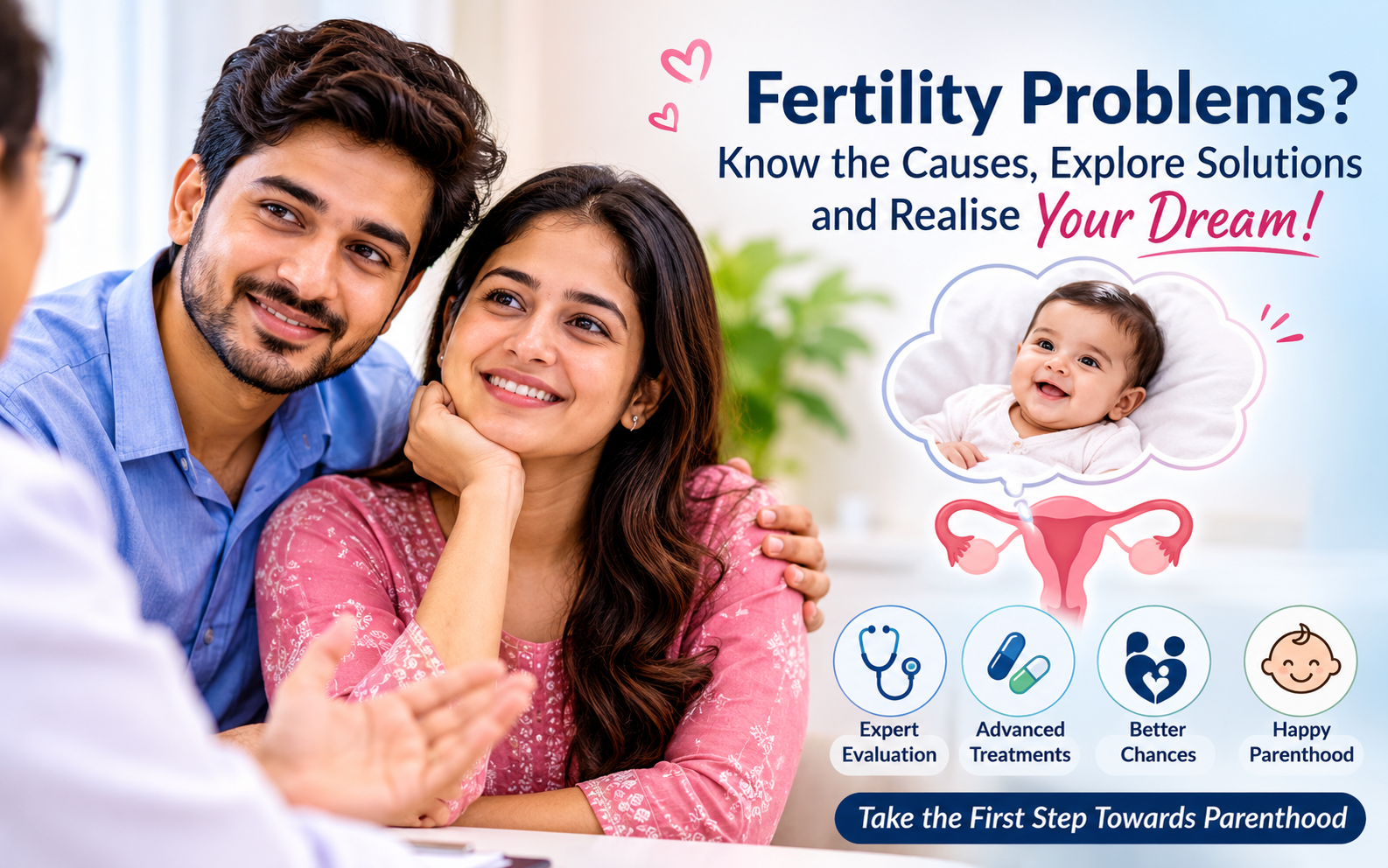
Starting a family is an important dream for many couples. However, getting pregnant does not always happen as quickly as expected. Irregular periods, hormonal imbalances, PCOS, blocked fallopian tubes, low sperm count and other reproductive health conditions can make conception challenging.
The good news is that many fertility problems can be identified through proper medical evaluation, and several treatment options are available today.
If you and your partner are experiencing difficulty conceiving, understanding the possible causes and available fertility treatments is the first step towards making informed decisions.
For couples looking for fertility treatment in Patna, PHS Fertility Clinic provides fertility care and treatment options designed around individual medical needs.
1. Why Am I Not Getting Pregnant Even After Trying for Months?
This is one of the most common questions couples ask fertility specialists.
Pregnancy depends on several factors, including healthy ovulation, good-quality sperm, open fallopian tubes, a healthy uterus and successful embryo implantation.
Some common reasons for difficulty conceiving include:
- Irregular or absent ovulation
- Polycystic Ovary Syndrome (PCOS)
- Hormonal imbalances
- Blocked or damaged fallopian tubes
- Endometriosis
- Reduced ovarian reserve
- Low sperm count or poor sperm motility
- Age-related changes in fertility
- Unexplained infertility
Possible solution: A fertility evaluation can help identify the underlying problem. Depending on the diagnosis, treatment may include ovulation management, medication, IUI or IVF.
2. Can PCOS Cause Difficulty in Getting Pregnant?
Yes. Polycystic Ovary Syndrome (PCOS) is a common hormonal condition that can affect ovulation and make conception more difficult.
Women with PCOS may experience:
- Irregular menstrual cycles
- Delayed or absent ovulation
- Acne and excessive facial hair
- Weight-related metabolic concerns
- Hormonal imbalances
However, having PCOS does not mean that pregnancy is impossible.
Possible treatment solutions:
- Lifestyle and weight management where appropriate
- Medical management of hormonal and metabolic concerns
- Ovulation-induction medication under medical supervision
- Timed intercourse
- IUI or IVF when clinically indicated
A fertility specialist can recommend an appropriate treatment plan based on the patient’s age, medical history and reproductive health.
3. What Should I Do If I Have Irregular Periods?
Irregular periods can sometimes indicate problems with ovulation or hormonal regulation.
Conditions such as PCOS, thyroid disorders and elevated prolactin levels may contribute to menstrual irregularities.
Women experiencing frequent missed periods, unusually long menstrual cycles or unpredictable bleeding should consider consulting a gynaecologist or fertility specialist.
Possible solution: Depending on the symptoms, doctors may recommend hormonal blood tests, thyroid evaluation, ultrasound examinations and ovulation assessment. Treatment focuses on addressing the underlying cause rather than simply regulating the menstrual cycle.
4. Can Low Sperm Count or Poor Sperm Quality Prevent Pregnancy?
Yes. Male fertility is equally important when a couple is trying to conceive.
Male-factor infertility may involve:
- Low sperm concentration
- Poor sperm motility
- Abnormal sperm morphology
- Hormonal problems
- Blockages in the reproductive tract
- Certain testicular conditions
Possible treatment solutions:
- Semen analysis and further evaluation
- Hormonal investigations when required
- Treatment of identifiable medical conditions
- Lifestyle modifications
- IUI in selected cases
- IVF or ICSI when clinically appropriate
It is important to remember that fertility evaluation should involve both partners. Male-factor infertility should not be overlooked or assumed to be the responsibility of the female partner.
5. What If the Fallopian Tubes Are Blocked?
The fallopian tubes play an important role in natural conception. They allow sperm and the egg to meet and facilitate the movement of the early embryo towards the uterus.
Blocked or damaged fallopian tubes can prevent natural fertilisation.
Possible causes include previous pelvic infections, endometriosis and certain surgical complications.
Possible solution: A doctor may recommend an HSG (Hysterosalpingography) or another suitable investigation to assess tubal health.
For selected patients with significant tubal blockage, IVF may be recommended because fertilisation takes place outside the body before an embryo is transferred into the uterus.
6. What Is Unexplained Infertility and Can It Be Treated?
Sometimes, standard fertility investigations do not reveal a clear reason why a couple is unable to conceive. This condition is known as unexplained infertility.
It does not mean that there is no possibility of pregnancy.
Possible treatment options include:
- Monitoring the natural menstrual cycle
- Timed intercourse
- Ovulation stimulation in selected cases
- Intrauterine Insemination (IUI)
- In Vitro Fertilisation (IVF)
The most suitable approach depends on the woman’s age, duration of infertility, previous treatment history and other clinical findings.
7. When Should a Couple Consider IVF Treatment?
In Vitro Fertilisation (IVF) is an advanced fertility treatment in which eggs are collected from the ovaries and fertilised with sperm in a laboratory. The resulting embryo may then be transferred into the uterus.
IVF may be considered in situations such as:
- Blocked or severely damaged fallopian tubes
- Certain cases of male-factor infertility
- Reduced ovarian reserve, depending on the clinical assessment
- Endometriosis-related fertility difficulties
- Unexplained infertility after appropriate evaluation and treatment
- Previous unsuccessful fertility treatments
IVF is not necessarily the first treatment for every couple. A fertility specialist evaluates the medical condition before recommending the procedure.
8. What Is the Difference Between IVF and IUI?
Both IVF and IUI are fertility treatments, but they work differently.
| IUI Treatment | IVF Treatment |
|---|---|
| Prepared sperm is placed inside the uterus. | Eggs are collected and fertilised in a laboratory. |
| Fertilisation happens inside the body. | Fertilisation happens outside the body. |
| Usually less invasive. | Involves ovarian stimulation and egg retrieval. |
| Suitable for selected fertility conditions. | Used for a wider range of fertility conditions. |
The choice between IUI and IVF depends on the underlying fertility problem, age, test results and previous treatment history.
9. Can Women With Low Ovarian Reserve Get Pregnant?
Ovarian reserve refers to the remaining quantity of eggs in a woman’s ovaries. Reduced ovarian reserve can affect fertility and may influence the response to fertility treatment.
However, low ovarian reserve does not automatically mean that pregnancy is impossible.
Doctors may recommend investigations such as:
- AMH (Anti-Müllerian Hormone) testing
- Antral follicle count through ultrasound
- Other hormone tests when indicated
Possible solution: Depending on the findings, a fertility specialist may discuss IVF, individualised ovarian stimulation or other appropriate treatment options.
10. What If IVF Has Failed More Than Once?
An unsuccessful IVF cycle can be emotionally difficult for couples. However, one unsuccessful cycle does not necessarily mean that future treatment will fail.
A fertility specialist may review:
- Previous ovarian stimulation response
- Egg and embryo development
- Embryo transfer history
- Uterine health
- Relevant hormonal and medical conditions
- Sperm-related factors
Further investigations or changes in the treatment approach may be considered where medically justified.
In selected cases, genetic counselling or preimplantation genetic testing (PGT) may also be discussed. PGT is not required for every IVF patient and should be recommended only when appropriate.
11. When Should You Visit a Fertility Specialist?
Couples should consider seeking professional advice:
- If pregnancy has not occurred after 12 months of regular unprotected intercourse when the female partner is below 35.
- If pregnancy has not occurred after 6 months when the female partner is 35 or older.
- If the female partner is over 40, an earlier evaluation is generally advisable.
- If there are irregular periods, known PCOS, endometriosis or suspected tubal problems.
- If the male partner has a known reproductive health concern.
- If there is a history of recurrent pregnancy loss.
Early evaluation can help identify potential problems and avoid unnecessary delays in treatment.
Why Choose PHS Fertility Clinic for Fertility Treatment in Patna?
Choosing a fertility clinic is an important decision. Couples should look for experienced medical professionals, appropriate diagnostic facilities, transparent treatment discussions and individualised fertility care.
PHS Fertility Clinic in Patna offers fertility-related consultation and treatment services, including:
- IVF treatment
- IUI treatment
- Fertility evaluation and management
- Donor egg and donor sperm programmes
- Genetic counselling and PGT-related services where clinically indicated
Dr. Prajnanika Gurung, Managing Director and Founder, is an MBBS Gold Medalist and holds an MD in Obstetrics and Gynaecology from AIIMS New Delhi.
Dr. Monalisa Singh, Clinical Director and Chief Consultant in Reproductive Medicine, oversees daily fertility procedures at the Patna branch.
The medical team focuses on understanding each patient’s reproductive health concerns and discussing suitable treatment options based on individual requirements.
For couples searching for a fertility clinic in Patna, getting the right medical guidance can be an important first step.
Frequently Asked Questions About Fertility Treatment
Q1. What is the most common reason for infertility in women?
Common contributing factors include ovulation disorders, PCOS, endometriosis, tubal problems and age-related changes in fertility. The actual cause varies from patient to patient.
Q2. Can infertility be treated without IVF?
Yes. Depending on the cause, treatment may involve lifestyle modifications, medication, ovulation induction or IUI. IVF is recommended when clinically appropriate.
Q3. Can PCOS patients conceive naturally?
Yes. Many women with PCOS conceive naturally, while others may require ovulation-induction treatment or assisted reproductive techniques.
Q4. Is male fertility testing necessary before IVF?
Yes. Male fertility assessment, including semen analysis, is an important part of evaluating couples before fertility treatment.
Q5. How long should we wait before consulting an IVF doctor in Patna?
Generally, couples should seek an infertility evaluation after 12 months of trying if the female partner is below 35, or after 6 months if she is 35 or older. Earlier assessment may be appropriate when known fertility problems exist.
Q6. Does low AMH mean I cannot become pregnant?
No. Low AMH indicates reduced ovarian reserve but does not independently determine whether natural conception or pregnancy through fertility treatment is possible.
Q7. Is IVF suitable for every infertile couple?
No. IVF is one of several fertility treatment options. The appropriate treatment depends on the diagnosis, age, medical history and individual circumstances.
Take the First Step Towards Your Parenthood Journey
Fertility challenges can be stressful, but you do not have to navigate them without professional guidance.
Understanding the cause of infertility and exploring appropriate treatment options can help couples make informed decisions about their reproductive health.
If you are experiencing difficulty conceiving and looking for an experienced fertility specialist or IVF doctor in Patna, consult the team at PHS Fertility Clinic.
Book Your Consultation Today and Take an Informed Step Towards Parenthood.
Visit our Patna Clinic:
Patna
E 145, Doctors Colony Rd,
Malahi Pakri, Kankarbagh,
Patna, Bihar 800020
Our Direction: https://share.google/5h89pc6yIGDhtQo5N